
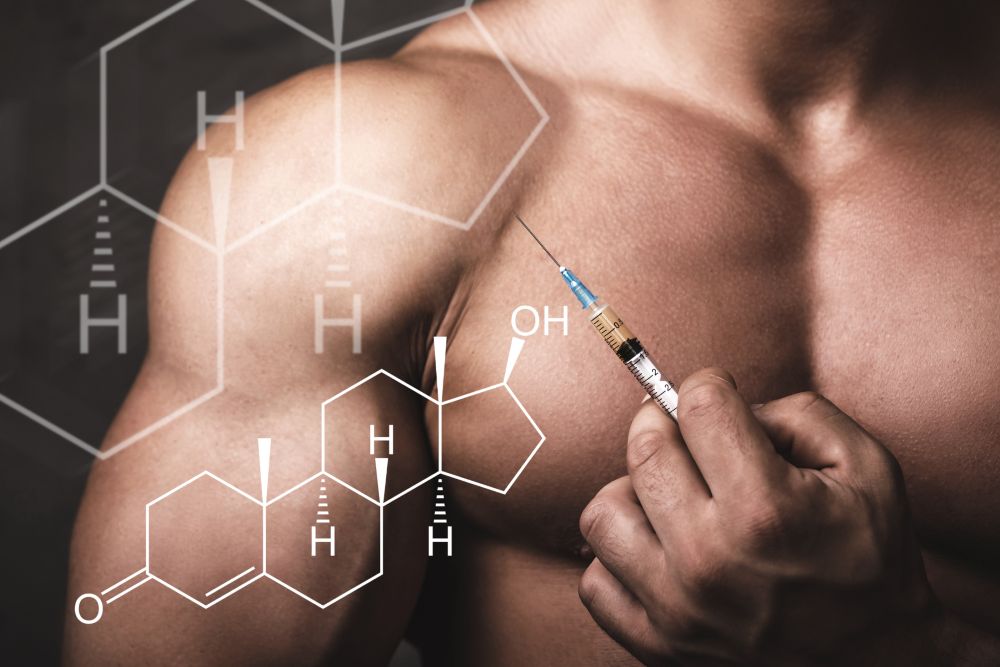
Two approaches exist for addressing low testosterone in a physician-guided clinical setting: testosterone replacement therapy (TRT) and peptide therapy. TRT delivers testosterone directly from an external pharmaceutical source. Certain peptides work differently, signaling the body’s own hypothalamic-pituitary axis to stimulate natural testosterone production. Both require clinical evaluation, baseline bloodwork, and ongoing monitoring before any protocol begins.
TRT is a direct hormone delivery method. Peptide therapy works indirectly, sending signals upstream through the body’s own hormonal cascade. Both can raise circulating testosterone, but the mechanism, side effect profile, and appropriate patient population differ significantly.
| Feature | TRT | Peptide Therapy |
| Mechanism | Exogenous testosterone delivery | Stimulates the hypothalamic-pituitary-testicular (HPT) axis |
| Testosterone source | External (pharmaceutical) | Internal (body’s own production) |
| Administration | Injection, gel, patch, or pellet | Subcutaneous injection (primarily) |
| Effect on natural production | Suppresses LH, FSH, and endogenous output | Preserves or stimulates natural production |
| Evidence base | Decades of clinical data; established use guidelines for confirmed hypogonadism | Emerging; primarily preclinical or early-phase clinical |

TRT raises testosterone by introducing it externally. The body detects elevated levels and responds by reducing its own production, a negative feedback loop that suppresses the HPT axis during active use.
Key downstream effects of TRT include:
The Endocrine Society’s clinical practice guidelines recommend TRT for men with confirmed hypogonadism: two separate morning testosterone readings below 300 ng/dL alongside documented symptoms. TRT is intended for clinical hypogonadism, not age-related testosterone decline in otherwise healthy men.
Peptides for testosterone work upstream of hormone production. Rather than supplying testosterone externally, these compounds signal the hypothalamus or pituitary to increase the body’s own output of LH, FSH, and ultimately testosterone. Because the signal originates from within the body’s own feedback system, the hormonal axis remains active during treatment.
Three compounds are most commonly discussed in physician-guided settings as testosterone-stimulating peptides:
| Peptide | Primary Mechanism | Evidence Level | Clinical Status |
| gonadorelin | GnRH agonist; stimulates LH and FSH release from the pituitary | Clinical; established in fertility medicine | Used off-label in physician-guided protocols |
| kisspeptin-10 | Activates GnRH neurons in the hypothalamus upstream of LH and FSH | Emerging clinical; limited large-scale trials | Research-stage; used off-label in select protocols |
| hCG (human chorionic gonadotropin) | LH analog; directly stimulates Leydig cells in the testes | Well-established; used in reproductive medicine | Prescribed off-label alongside or instead of TRT in select cases |
Research indexed on PubMed documents kisspeptin’s role in regulating GnRH pulsatility, and NIH-indexed literature supports gonadorelin’s application in LH stimulation and fertility preservation. All three require a physician prescription and licensed pharmacy sourcing.
The effects of TRT and peptide therapy differ in onset, reversibility, fertility impact, and evidence depth. No single approach is universally superior.
| Category | TRT | Peptide Therapy (gonadorelin / kisspeptin / hCG) |
| Testosterone effect | Direct, predictable elevation | Stimulated; dependent on HPT axis responsiveness |
| Onset of noticeable change | 3 to 6 weeks (varies by formulation) | 6 to 12 weeks or longer depending on axis response |
| Natural production impact | Suppressed during active use | Preserved or stimulated |
| Fertility impact | Reduced or eliminated sperm output | Fertility axis generally maintained |
| Reversibility | Natural production may partially recover after stopping (not guaranteed) | Axis remains functional during and after use |
| Evidence strength | Strong; decades of RCTs and clinical use | Emerging; limited large-scale human trial data |
| Monitoring requirements | Hematocrit, PSA, testosterone, lipids every 3 to 6 months | Testosterone, LH, FSH, estradiol at regular intervals |

For men with confirmed clinical hypogonadism, TRT offers reliable, measurable testosterone elevation backed by a deep clinical evidence base.
Key documented benefits include:
Peptide-based approaches offer a different clinical value proposition, particularly for men who prioritize preserving natural hormonal function.
Key potential advantages include:
| RELATED TOPIC : Best Peptides for Testosterone in 2026: What Actually Works
TRT carries a well-characterized side effect profile requiring active clinical monitoring.
Clinically significant risks include:
Peptide-based protocols carry a different and generally less characterized risk profile.
Known and potential side effects include:
Candidacy depends on lab values, fertility goals, HPT axis responsiveness, and clinical history. A licensed clinician determines the appropriate path based on comprehensive evaluation, not symptom checklists.
| Consideration | May Be a Better Fit: TRT | May Be a Better Fit: Peptide Therapy |
| Lab-confirmed testosterone | Below 300 ng/dL with documented symptoms | Suboptimal but not clinically deficient |
| Age and life stage | Older adults; fertility not a current concern | Younger adults; fertility a current or future priority |
| Fertility goals | Not an active priority | Active concern; axis preservation a clinical goal |
| HPT axis status | Suppressed or insufficiently responsive | Functional; responsive to upstream signaling |
| Primary goal | Reliable, sustained symptom resolution | Hormonal optimization with axis preservation |
Both pathways require physician-led evaluation before any protocol begins. Self-sourcing either approach carries significant health and safety risks.
Step 1: Document your symptoms. Track energy, mood, libido, sleep quality, and physical changes. Note when symptoms began and any patterns. Bring this record to your evaluation.
Step 2: Complete a physician-led intake and baseline bloodwork. A standard panel includes total and free testosterone, LH, FSH, SHBG, estradiol, hematocrit, and PSA for men over 40. Testosterone draws should be completed before 10:00 AM for accuracy.
Step 3: Review results with your clinician. Lab reference ranges reflect population averages. A clinician interprets results in context of your symptoms, age, and health history before any recommendation is made.
Step 4: Follow a personalized protocol with structured monitoring. Compound selection, dose, and cycle length are clinician-determined. TRT requires labs every 3 to 6 months. Peptide protocols require LH, FSH, and testosterone monitoring to track HPT axis response.
Costs vary by provider, compound, and monitoring frequency. The figures below reflect physician-guided programs that include consultation, labwork, and licensed pharmacy sourcing.
| Item | Estimate TRT Cost | Estimate Peptide Therapy Cost |
| Medication (monthly) | $50 to $150 | $100 to $350 |
| Full clinic program (monthly) | $150 to $400 | $200 to $500 |
| Initial consultation and labs | $150 to $500 (one-time) | $150 to $500 (one-time) |
| Monitoring labs (per visit) | $100 to $300 | $100 to $300 |
| Estimated annual cost | $2,000 to $6,000+ | $2,500 to $7,500+ |
These figures are market estimates and will vary based on provider, protocol complexity, and geographic location. Programs that exclude physician oversight and pharmacy sourcing are not lower-cost alternatives; they carry additional risk that offsets any apparent savings. A clinic like Beyond Biology can provide a clearer picture of what a fully supervised protocol costs based on your specific lab results and treatment goals.
| RELATED TOPIC : Cost of Peptide Therapy: What to Expect & Is It Worth It?
Peptides are not a direct replacement for TRT in men with confirmed clinical hypogonadism. In men with suboptimal but not deficient testosterone whose HPT axis remains functional, peptide therapy may support endogenous production without suppressing the axis. A clinician evaluates this distinction through lab values before making any recommendation.
Gonadorelin, kisspeptin-10, and hCG are the most clinically discussed options. Gonadorelin and kisspeptin work upstream in the hypothalamic-pituitary axis to increase LH and FSH output. hCG acts as a direct LH analog, stimulating the testes to produce testosterone. All require a physician prescription and licensed pharmacy dispensing.
TRT users typically notice early effects within 3 to 6 weeks, with fuller results at 3 to 6 months. Peptide-based stimulation often takes longer, with measurable testosterone changes appearing at 6 to 12 weeks depending on HPT axis responsiveness. Both timelines vary by baseline hormone levels, age, and protocol adherence.
The right approach depends on your lab values, your hormonal baseline, your fertility goals, and your health history. A comparison article cannot determine that. A licensed clinician reviewing your bloodwork can. Beyond Biology provides physician-guided evaluation for both TRT and peptide-based testosterone protocols, with the diagnostic rigor that accurate treatment decisions require.
This article is for informational and educational purposes only and does not constitute medical advice, diagnosis, or treatment. TRT and peptide therapy may not be appropriate for everyone. Always consult a qualified healthcare professional before starting any hormone therapy or peptide protocol.